
An RNAi renaissance is creating a new generation of startups
Research into RNA interference, a Nobel Prize-winning technique to mute disease-causing gene mutations, has gained momentum in recent years. Since 2018, six medicines based on the technology have won approval to treat a variety of rare diseases, as well as high cholesterol. Dozens more are in clinical testing.
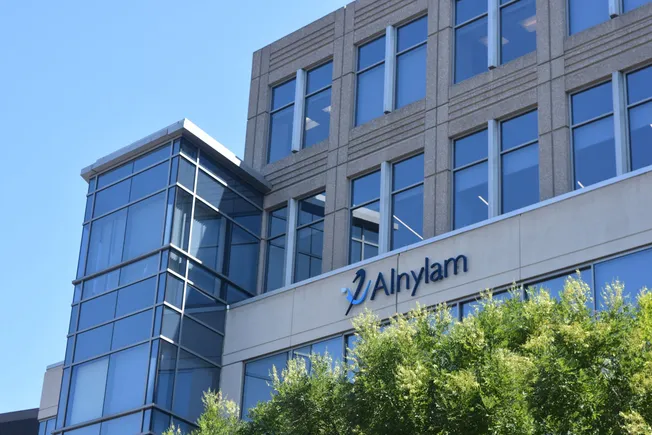
Yet the field’s best-known companies, led by Alnylam Pharmaceuticals, have only taken RNAi so far. Their drugs are still largely focused on disease targets in the liver, limiting RNAi’s reach compared to other types of medicines. The technology’s maturation has also come at a time of fast progress for genetic medicines, like those built from CRISPR, that promise longer-lasting benefits.
A new group of startups, though, believes RNAi is ready to take another big leap forward. Backed by experienced and high-powered investors, they say the necessary technical advances have been made to significantly expand use of the technology.
Two, City Therapeutics and Judo Bio, debuted last month with more than $100 million in funding. Two others, Switch Therapeutics and Aro Biotherapeutics, recently raised sizable private financings as well.
“There’s an opportunity to create a whole new generation of RNAi therapeutics,” said John Maraganore, the former CEO of Alnylam, who serves as City’s executive chair and advises Judo.
Excitement over RNAi’s potential dates back to the 1990s, when scientists Andrew Fire and Craig Mello discovered a way to use tiny, synthetic RNA strands to “silence” a gene. The concept caught on in scientific labs around the world and birthed a group of biotech companies including Alnylam, Arrowhead Pharmaceuticals and Dicerna Pharmaceuticals.
But it took two decades for RNAi research to yield an approved drug, as developers wrestled with how to safely and effectively deliver the therapies into cells. Along the way, large pharmaceutical companies like Novartis, Roche and Merck & Co. first embraced and then later retreated from the field.
Alnylam persevered with the help of partnerships and by focusing on the liver, using fatty spheres and sugar molecules to deliver its medicines. A string of drug approvals followed, starting with Onpattro in 2018, and turned Alnylam into one of biotech’s most valuable companies.
New techniques for delivering RNAi drugs to other tissues are now creating opportunities to broaden the technology’s use. “A lot of times, investments are driven by past successes,” said Dee Datta, CEO of Switch Therapeutics.
Last year, Alnylam revealed early evidence it could get an RNAi drug into the brain. Arrowhead, after an earlier setback, might have found a way to send RNAi therapies into the lungs, a tough target for nucleic acid therapies. Dyne Therapeutics and Avidity Biosciences have shown they may be able to use antibodies to deliver different RNA medicines — antisense oligonucleotides — into muscles.
“With all these new data points, I think people are saying, ‘Oh, wow, there’s a new opportunity that’s emerging out there,’” Maraganore said.
City is one example. It’s developing synthetic RNAs meant to be smaller and more potent than their predecessors, as well as targeting molecules that can get RNAi therapies to more tissue types.
Judo, meanwhile, is “in the mold” of Alnylam, just with a focus on the kidney, said Jeff Goater, a venture partner at The Column Group and a Judo investor. The startup is making drugs that use a special ligand to send RNA payloads to specific types of kidney cells.
Goater’s firm invested in Judo about a year after Atlas Venture incubated the startup in 2022. It co-led Judo’s seed financing as well as the company’s Series A. He said hearing Judo’s core concept was “one of those ‘aha’ moments.”
The startup was built from “pieces of knowledge that were all available,” Goater said. “It’s almost like you whack yourself on the head and say, ‘Oh, I wish I thought of that.’”
Switch, which debuted with $52 million in 2023, has a different twist on RNAi. It’s attaching compact sensors to RNAs so they only activate in certain cell types. The company is using the approach to target CNS disorders.
Another startup, Aro, is conjugating proteins it calls Centyrins to RNAi drugs and other oligonucleotides. It raised about $42 million last year and has a medicine for Pompe disease in human testing.
Datta, the CEO of Switch, said the investment in new RNAi companies shows investors know they’re “just scratching the surface” of what the technology can do.
Alnylam’s work has “mostly addressed” the scientific risk involved, allowing new companies to experiment with what’s next, Datta said.
In the past, Alnylam crowded out early competitors by acquiring much of the intellectual property covering RNAi. That likely made it difficult for other startups to form and raise funding, according to Maraganore.
But when a company gets as large as Alnylam is now, it’s hard to dedicate many millions of dollars “on some new frontier.” That’s what is “unique” about startups, Maraganore said.
“It’s hard to imagine that Alnylam would spend $135 million on a new twist on RNAi or $100 million on kidney delivery,” he said. “They couldn’t.”