
The Role of Encryption in Information Security
Encryption in Information Security
Encryption is an essential part of information security because it converts human-readable data into incomprehensible code that can only be deciphered with a secret key. As such, cybercriminals that intercept encrypted data will find themselves facing a wall of unreadable text, preventing them from being able to extract or use it for their malicious purposes. This protects confidentiality and ensures that only authorized parties can see sensitive information or communications. It also supports authentication and integrity, verifying that information is genuine and has not been tampered with during transmission or storage.
Cyberattacks often involve stealing or otherwise compromising confidential or proprietary information, such as financial records, personal customer details and intellectual property. This can cause financial loss, reputational damage and even expose businesses to regulatory fines and penalties. Encryption is an important part of information security because it can significantly reduce the risks of these attacks, protecting confidential and proprietary data from unauthorized access or theft.
In addition to its protective capabilities, encryption offers other benefits that can improve business operations. For example, it can help with regulatory compliance and ensuring data privacy in accordance with industry regulations and government policy, such as GDPR, HIPAA and the Gramm-Leach-Bliley Act. Additionally, encryption can enhance an organization’s brand image and support its competitive advantage by demonstrating that it takes the protection of confidential information seriously.
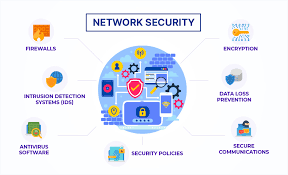
The Role of Encryption in Information Security
The most common use for encryption is to protect data at rest, meaning it’s stored on a device or server rather than being transmitted over the Internet. This includes files, emails and other types of data stored on desktop PCs, laptops or portable devices such as tablets and smartphones. Data at rest is protected by using a range of encryption technologies including strong passwords, disk and file level encryption and cloud-based backups.
Encryption can also be used to secure data in transit. This is when it’s being sent between endpoint devices over a network, such as sending credit card or login details from an online retailer’s website to a web server. Network encryption can be performed by using tools such as Secure Sockets Layer (SSL) and Transport Layer Security (TLS). Database encryption is another form of network encryption, used to protect information stored in databases against unauthorized access or theft.
While there are some limitations to the use of encryption, such as a performance impact on the speed and efficiency of data processing and retrieval, it remains an essential component of information security. As cybercriminals continue to develop sophisticated tactics for attacking organizations and individuals, securing critical information through encryption is an effective way to mitigate these risks.
Denial of Service (DoS) Attacks: In a DoS attack, the attacker floods a network or server with excessive traffic, causing it to become overwhelmed and unavailable. Distributed Denial of Service (DDoS) attacks involve multiple systems working together to amplify the attack. Man-in-the-Middle (MitM) Attacks: In this type of attack, the attacker intercepts communications between two parties to eavesdrop, alter, or steal information. This can occur over unsecured networks, such as public Wi-Fi.