
What Is the Ideal Impedance for Headphone Speakers?
Ideal Impedance for Headphone Speakers
Impedance is a measure of the resistance that something presents to alternating current (AC) passing through it. It’s a little more complex than the simple electrical law of Ohm’s Law because we are talking about AC, where electrons change direction periodically (think of your favorite song as a vibration of particles rather than an actual vibration of music waves). The headphone speaker is made up of multiple parts, including resistors, capacitors and inductors, but it is usually described with just its resistance. Impedance is measured in ohms and can vary from 8 to 600 ohm (or more in some rare cases).
Most headphones use electrodynamic speakers like the ones used as woofers in studio monitors. The fixed magnet in these headphones is attached to a coil and connected diaphragm, and an AC signal representing your favorite songs is fed into this system. The movement of the magnetic field in the magnet causes the coil to vibrate back and forth. This in turn creates a vibration in the diaphragm and the sounds we hear. The impedance of the headphone, defined by its resistance and other factors, determines how much power it draws from an amplifier. Using a headphone with higher impedance than its rated value will result in distortion and a lack of sufficient output power.
Ideally, the output impedance of your audio source should be about 1/8th of your headphone’s impedance, which is often called the ‘rule of eighths’. This will ensure that the headphone’s driver is properly controlled, contributing to sound quality. However, if the source impedance is much lower than that of the headphones you are using, there will be significant loss of power which could lead to poor performance.
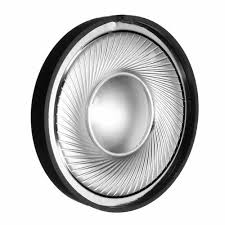
What Is the Ideal Impedance for Headphone Speakers?
Manufacturers of headphones typically report a single number for their headphones’ nominal or average impedance, but this is often misleading. Headphone impedance varies over the frequency spectrum, and it can even vary from ear to ear.
For this reason, comparing one pair of headphones to another can be challenging. You must take the sensitivity of your headphones into account, as well as their impedance, when choosing an amplifier for them. Typically, headphone speakers use dynamic drivers, which convert electrical signals into sound waves. The size and type of these drivers can significantly affect sound quality, impacting bass response, clarity, and overall fidelity. Some high-end headphones feature planar magnetic or electrostatic drivers, offering even greater sound precision.
A headphone’s sensitivity is a measurement of how loud it will be with a specific amount of power (usually given in decibels per milliwatt, or dB/V). Headphones vary widely in sensitivity, but the vast majority have a sensitivity that is relatively high.
For most portable electronics, such as mobile phones and portable music players, this sensitivity is enough for them to play your tunes at reasonable volumes without the need for an external headphone amp. If you have headphones with a lower sensitivity, or higher impedance than the recommended minimum of 120 ohms, then you will need a portable headphone amplifier in order to get good sound.