
Why I’m Glad I Bought the M4 iPad Pro Over the Surface Pro
I bought the 13-inch M4 iPad Pro shortly before Microsoft released the Snapdragon X Elite-powered Surface Pro 11th Edition in mid-2024. However, I don’t regret buying Apple’s flagship iPad even though it doesn’t run a desktop-class operating system, and here’s why.
1 Apple Offers a Superior OLED Display
Although both tablets feature OLED displays, the one on the iPad is superior because it uses tandem OLED technology, which Apple calls Ultra Retina XDR. Basically, the M4 iPad Pro has two OLED panels stacked together to help it achieve higher brightness levels.
For reference, the standard OLED panel on the Surface Pro can hit 900 nits of peak HDR brightness and 600 nits of full-screen brightness for SDR content. In comparison, Apple rates the M4 iPad Pro for 1,600 nits of peak brightness for HDR content and 1,000 nits of full-screen brightness for SDR content.
That’s a significant difference between the two models, which is most noticeable when you use the tablet outdoors. So, if you want a brighter screen or a superior HDR experience while watching your favorite movies and TV shows, you can’t go wrong with the iPad Pro.
2 The iPad Pro Has Cellular Support
Microsoft plans to release 5G variants of the Surface Pro in the fall of 2024, but the lack of cellular models at launch is a bummer. This isn’t a problem if you go with the iPad Pro, as it’s available in both Wi-Fi and cellular variants.
Cellular connectivity allows me to use my iPad anywhere without having to rely on a nearby Wi-Fi network. Sure, you can use the hotspot feature on your phone and share its internet connection with the Surface Pro, but it’s not as fast and reliable as a dedicated cellular connection.
3 It Works Seamlessly With My Apple Devices

As someone who uses an iPhone and Mac, I can confidently say my iPad Pro fits in well with the rest of my devices. Thanks to some of the best Apple Continuity features like AirDrop, Sidecar, Universal Clipboard, and Universal Control, I can switch between my devices to get things done easily.
For example, the Universal Control feature lets me use my Mac’s keyboard and trackpad with my iPad. Universal Clipboard, on the other hand, allows me to copy content from my iPhone or Mac and paste it into my iPad. Lastly, Sidecar lets me use my iPad as a second display for Mac.
Had I opted for Microsoft’s Surface Pro, I’d be missing out on all these nifty features that help me be more productive.
4 The iPad Pro Is Far More Portable

Apple made the 2024 iPad Pro models thinner and lighter than ever before. The 13-inch M4 iPad Pro is only 5.1mm thick and weighs just 1.28 lbs. In comparison, Microsoft’s Surface Pro is 9.3mm thick and weighs 1.97 lbs. You’ll definitely notice this difference when you hold these devices side by side.
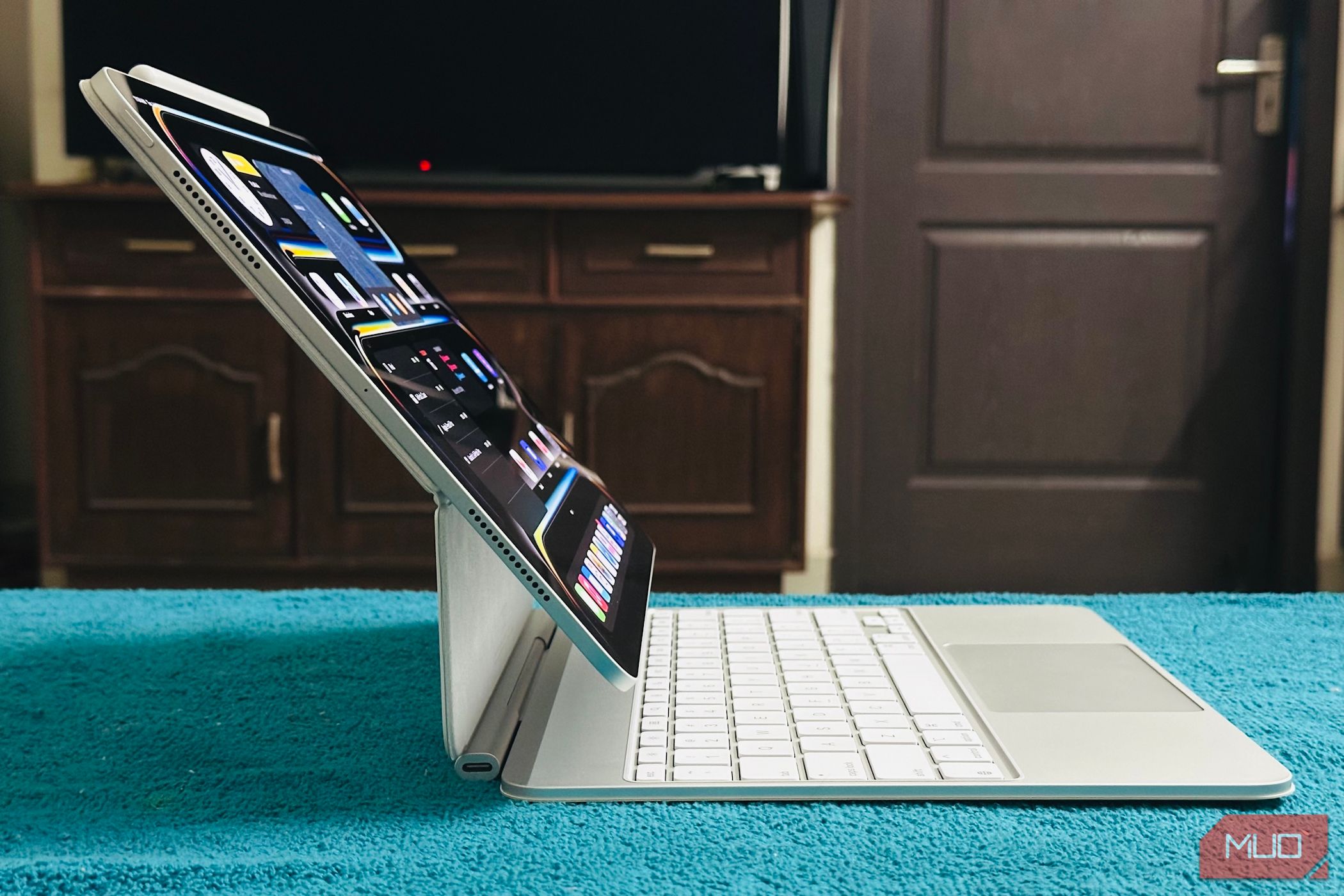
Considering I carry around my iPad Pro almost everywhere I go, its thin and light design makes a world of difference to me. The Surface Pro isn’t hefty by any means, but the iPad Pro is on another level when it comes to portability. Even with the Magic Keyboard attached, it weighs just as much as the M3 MacBook Air.
These are the main reasons why I don’t regret buying the 2024 iPad Pro when it came out. Sure, the Surface Pro has its strengths, but the factors I mentioned above matter more to me. So, if you’re torn between these two devices, do your research and make an informed decision.